Return to Uzone News Portal

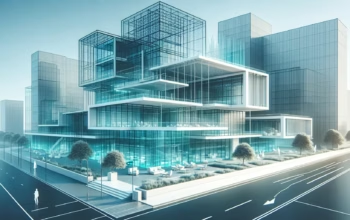
Building Information Modeling (BIM) has revolutionized architecture through its integration with AI, VR, and cloud computing. Today, architecture is evolving faster than ever before, with BIM at the heart of this transformation. From sustainable building practices to improved project visualization, BIM is driving innovation across the industry.
BIM unifies architectural, engineering, and construction teams on a single data-rich platform. Unlike traditional 2D methods, BIM provides 3D visualization that enables architects to anticipate challenges before construction begins. This minimizes costly errors and shortens project timelines.
Perhaps the most transformative feature of BIM is its ability to integrate real-time data. Platforms such as Autodesk Revit and Archicad allow continuous updates and ensure consistency at every stage of a project. In addition, BIM supports sustainability by integrating energy analysis, reducing material waste, and increasing resource efficiency.
Architectural Design
Findings from the RIBA Architecture 2024 survey reveal that artificial intelligence will soon be widely adopted and integrated into architectural practice, with the expectation of delivering tangible benefits in the near future.
“AI adoption in practice has already reached 41%, despite AI tools only becoming widely accessible to non-specialist users about a year ago. A significant number of firms report using AI at least occasionally for projects,” the survey notes.
According to Des Fagan, Head of Architecture at Lancaster University, artificial intelligence is often used in four key categories:
Design Ideation – AI is frequently used for visualizing design ideas. For example, licensed Photoshop users can now access Adobe Firefly’s AI-powered generative fill system, which provides instant visual capabilities.
An architect can take part of a building image, place it into a speculative landscape, and add objects such as people or cars, all through simple text prompts. Outsourcing rendering may no longer be necessary for firms that don’t specialize in this service.
Concept Design – Image diffusion tools like MidJourney and Stable Diffusion can generate stunning concept designs from text prompts. However, Des highlights D5 Render as the most exciting tool today, as it integrates seamlessly with CAD/BIM systems such as Rhino, Revit, SketchUp, and Archicad.
Text Generation with ChatGPT – Architects can use ChatGPT to draft and restructure reports, summarize ideas for client presentations, prepare cost proposals, planning applications, and even handle administrative tasks such as HR processes.
Archival Practices – Large firms with R&D budgets are beginning to apply machine learning to their own datasets, training artificial intelligence on their design catalogs, stylistic approaches, and internal information libraries. This streamlines operations and creates valuable in-house resources while avoiding potential copyright or authorship issues from pulling data off the internet or competitors.
Global Firms Using AI in Their Work
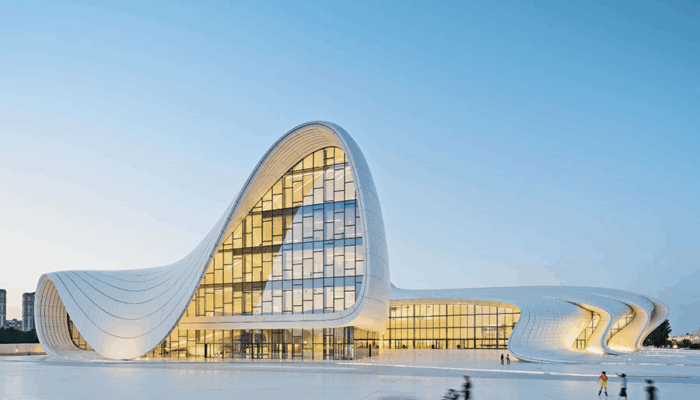
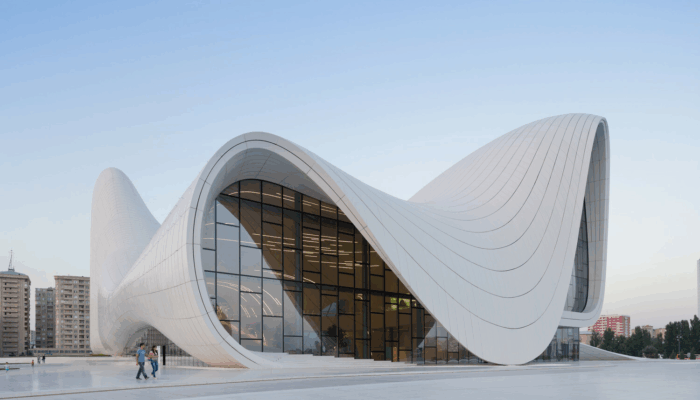
Zaha Hadid Architects (ZHA) is one of the most iconic architectural firms in the world, responsible for modern landmarks such as Napoli Afragola, Dominion Tower, Serpentine North Gallery, Fereshteh Pasargad Hotel, and Groupe CMS CGM.
ZHA has openly embraced cutting-edge AI tools to redefine architectural design. Known for its futuristic and organic structures, the firm has taken bold steps into the future by integrating generative AI into its design process.
Under the leadership of Patrik Schumacher, ZHA began experimenting with AI in 2022. “We are not just using AI to accelerate processes; we are using it to expand the possibilities of design itself,” Patrik stated.
The firm customizes AI tools to meet its architectural needs. By training models to interpret design drafts and generate innovative concepts, ZHA has streamlined its creative process without sacrificing design quality or uniqueness.
Generative AI tools such as Stable Diffusion and Rhino.ai are now integral to ZHA’s workflow. These tools allow architects to transform simple sketches into detailed renderings within hours. ZHA reports that AI integration has boosted productivity by up to 50% during mid-stage building design preparation.
Moreover, AI integration has opened new revenue streams for ZHA in the digital realm. The firm actively uses AI to develop metaverse projects, creating virtual spaces that align with its signature aesthetic.
Despite the remarkable benefits of AI, ZHA remains committed to transparency with its clients. The firm openly communicates its use of AI tools, ensuring clients understand how technology is integrated into the design process.